Mulled Wine & Gothic Spires: The Christmas Market Route Through Vienna, Budapest, and Prague
From mid-November, the old squares of Central Europe fill up with wooden stalls, a tree as tall as the houses around it, and the smell of mulled wine and roasting chestnuts. Three cities do it better than almost anywhere else, and they happen to be a few hours' drive apart: Prague, Vienna, and Budapest.
For centuries all three were part of the Habsburg world, and at Christmas you can still tell. They share the same pastries, the same carp on Christmas Eve, and the same Christ Child bringing the presents instead of Santa. But each city runs its markets its own way. Vienna is grand and well organized, Budapest puts the food first, and Prague has the backdrop you have already seen on a hundred postcards.
Here is how to plan it, city by city.
Planning the Route
Look at a map and the order makes itself. Vienna sits right between the other two: 337 km from Prague and 247 km from Budapest. Fly into Prague and out of Budapest, or the other way round, and you never have to double back. With a return flight from Budapest, do it as a loop instead: Vienna first, then Prague, then the 530 km run straight home in about five and a half hours.
Give each city at least two nights. The big markets deserve a full evening, and you will want the daylight for everything else. A week is ideal: two nights per city, plus a spare day for a stop along the way.
Drive in the morning and arrive by mid-afternoon. In December the sun sets around 4pm in all three cities, the lights come on soon after, and the markets are at their best from about 4 to 6pm on a weekday, before the after-work crowd arrives.
When to Go
The markets don't all open on the same day. Vienna goes first: the big market in front of City Hall runs from November 13 to December 26, 2026, and Schönbrunn opens even earlier, on November 6. Budapest's two main markets usually open in mid-November and stay open until New Year. Prague is last: the Old Town Square market is due to open on November 28, with the tree lighting at 4:30pm, and runs until January 6.
That makes November 28 to December 23 the window when all three are in full swing. Weekdays are far calmer than weekends. On a Saturday afternoon, Prague's Old Town Square alone can draw an estimated 15,000 to 20,000 people.
Plan around Christmas Eve. In all three countries the 24th, not the 25th, is the main family celebration. The markets close early that day (Prague and Budapest at 2pm) and many restaurants shut for the evening. If you are staying over Christmas, book your Christmas Eve dinner well in advance.
1. Prague: Old Town Square After Dark
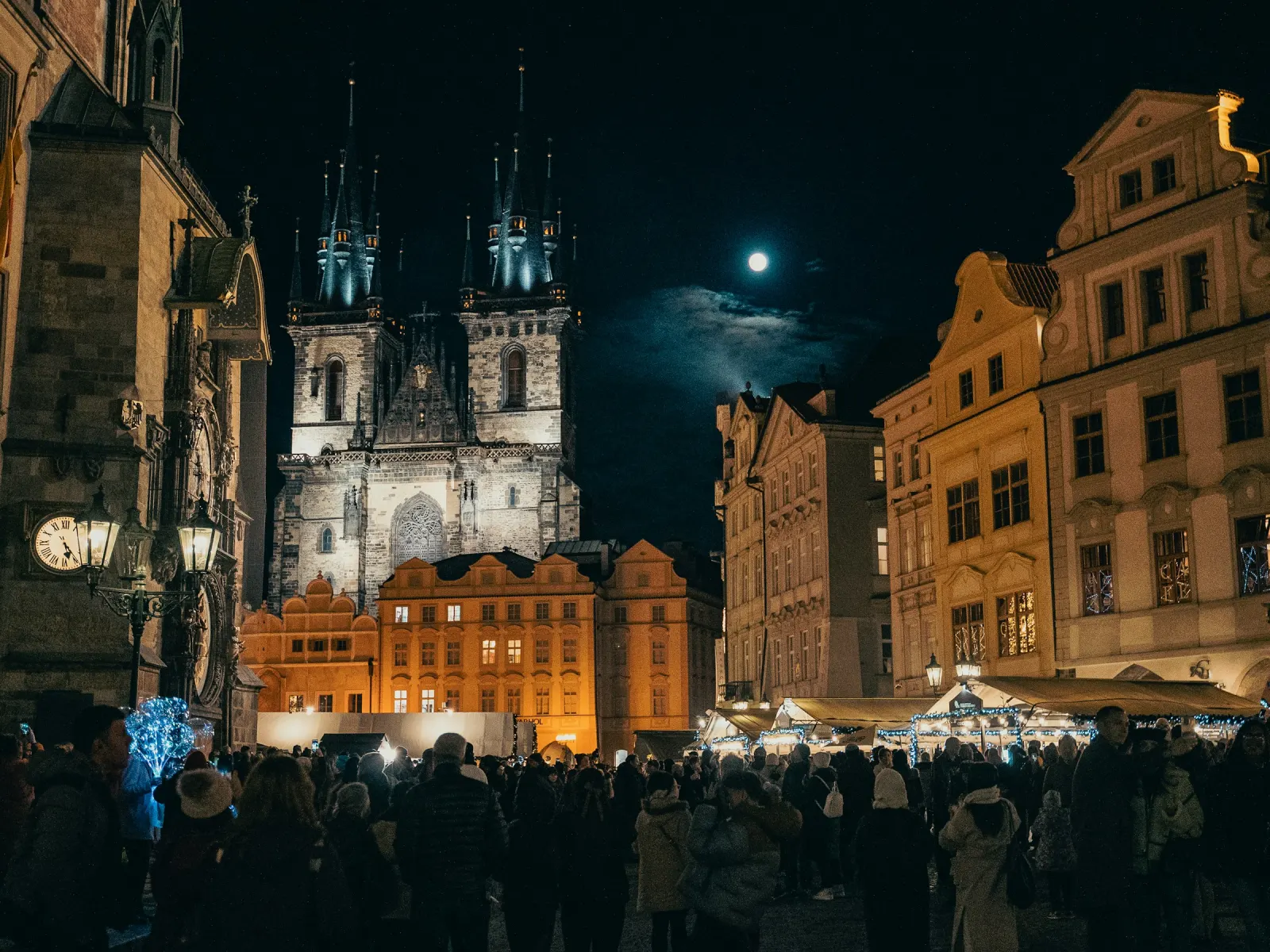
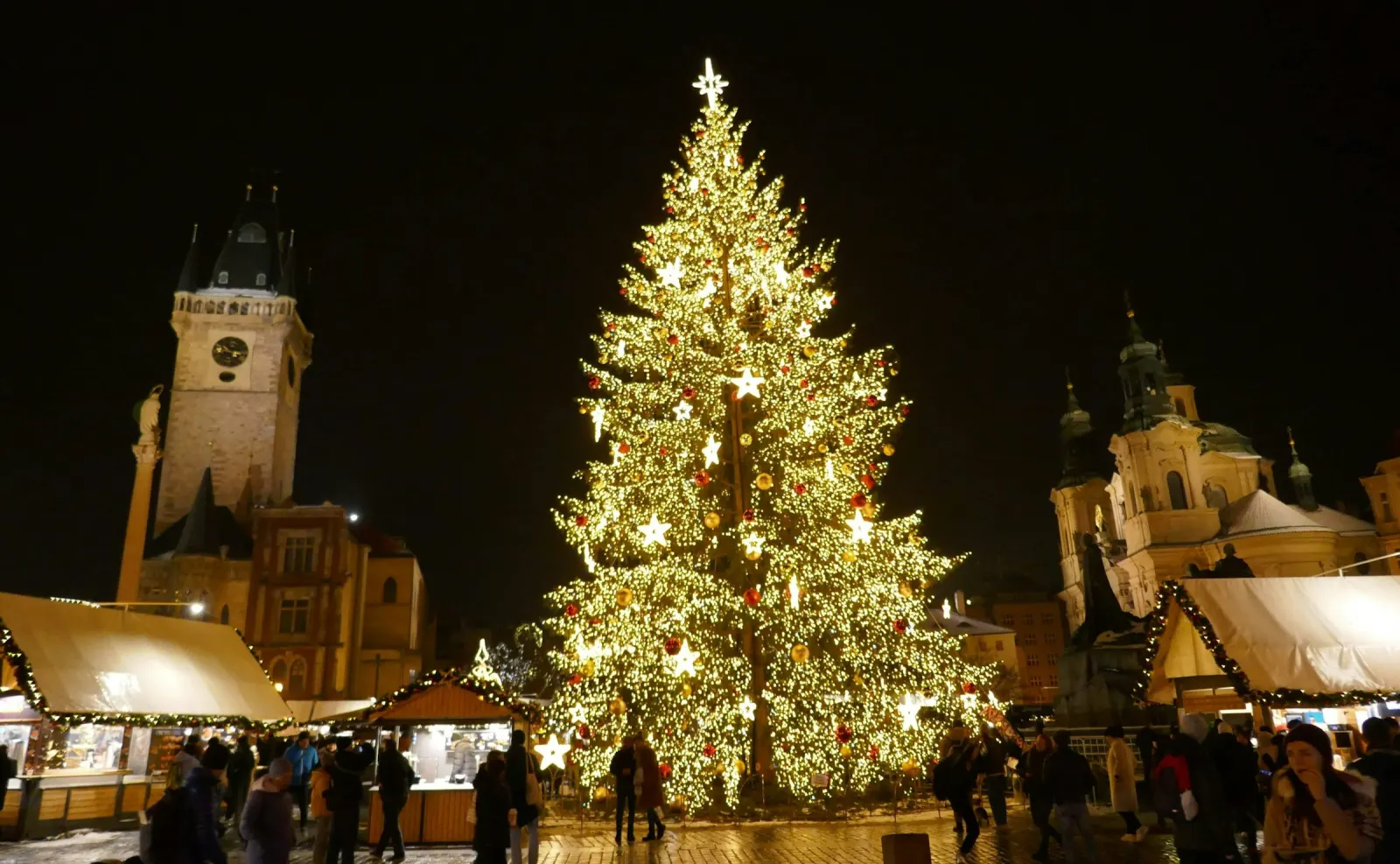
The Old Town Square market is the one on the postcards, and in person it lives up to them. The tree goes up in the middle of the square, with the twin spires of the Týn Church on one side and the Old Town Hall tower on the other. Every hour the Astronomical Clock on the tower puts on its little show, and the crowd in front of it grows as the evening goes on.
The Vibe: Theatrical and very busy. If the square gets too full, Náměstí Míru in Vinohrady is a short metro ride away: a neo-Gothic church, far fewer tour groups, and prices aimed at people who actually live there.
On the Plate: Pražská šunka, Prague ham roasted on a spit over an open fire and served with bread and mustard. Wash it down with svařák (mulled wine) or medovina, hot honey mead.
Pro Tip: The ham is priced per 100 grams, not per portion, and vendors cut generously. A plate can easily cost three or four times the number on the sign. Say how many grams you want before the knife comes out.
2. Vienna: Punch and Palaces
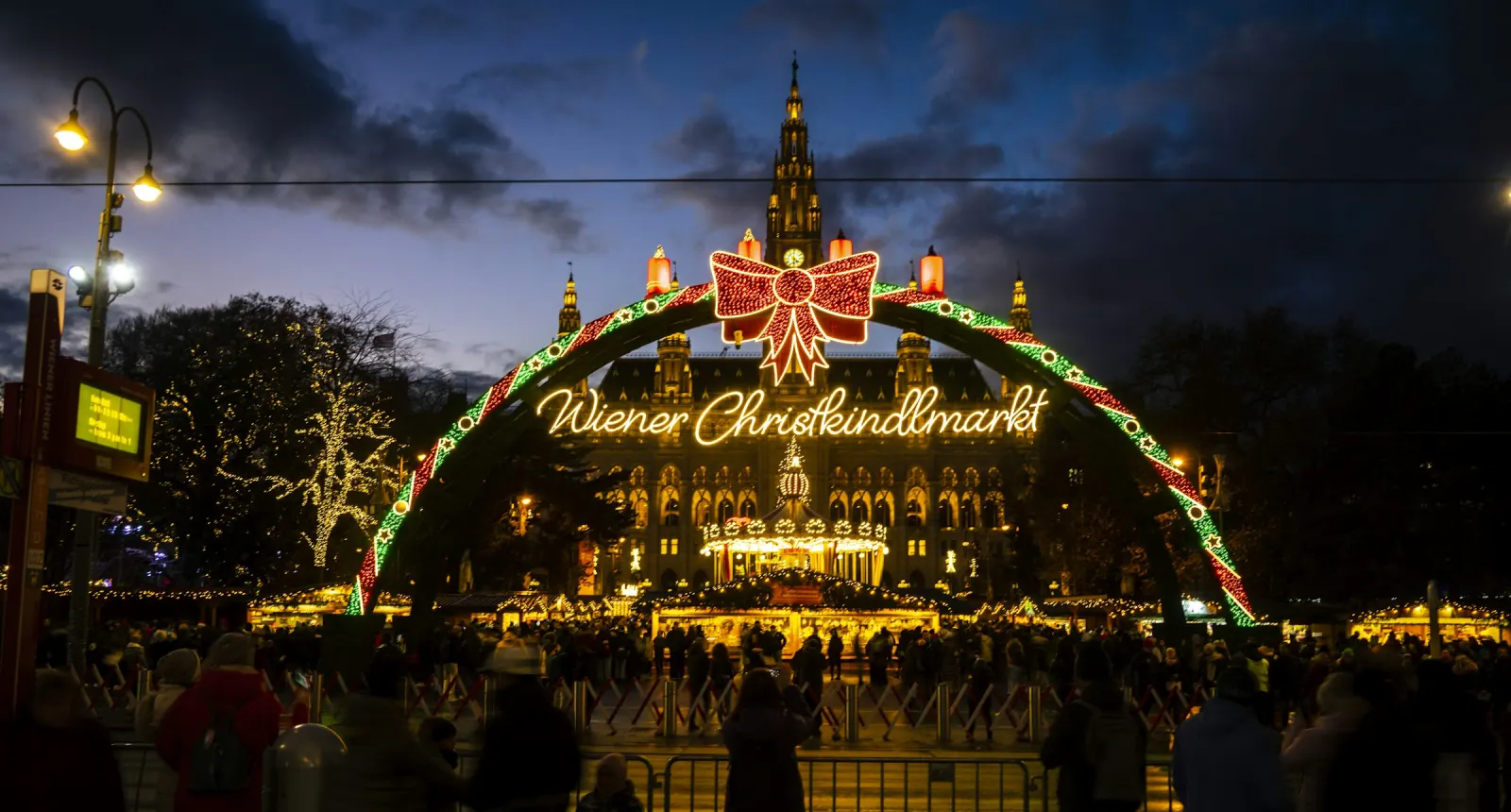
Vienna has more than a dozen Christmas markets, and locals treat them as an after-work ritual rather than a tourist attraction. The flagship is the Wiener Christkindlmarkt on Rathausplatz, in front of the neo-Gothic City Hall, with the park around it strung with lights. The tree is a gift from a different Austrian province every year, a tradition that goes back to 1959.
The Vibe: Grand, orderly, and busy from opening time. The real Viennese ritual is Punsch: hot fruit punch, often with a shot of rum, served in a ceramic mug with a new design every year. You pay a deposit of around €5 on the mug. Return it for your money, or keep it as the cheapest souvenir in Vienna.
On the Plate: Roasted chestnuts, Kaiserschmarrn (torn, sugared pancake with plum compote), and, a little unexpectedly, Langos. Austria adopted Hungary's fried dough years ago, so consider it a preview of Budapest.
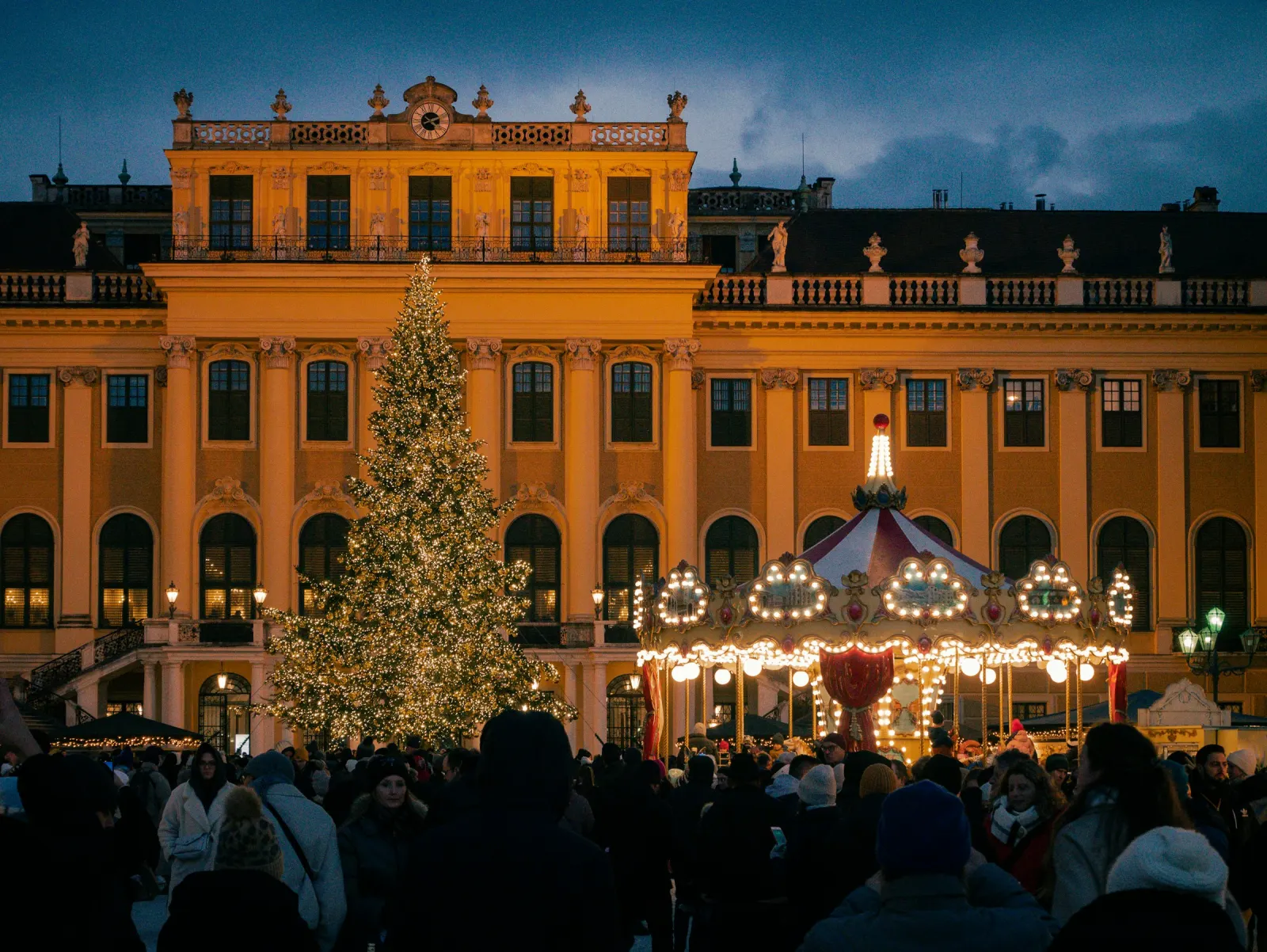
Schönbrunn: The market in front of the palace is smaller and calmer, with an ice rink and more handmade crafts. It also keeps going after Christmas, until January 6.
Local Secret: For a more local evening, head to Spittelberg, where the stalls fill the narrow Biedermeier lanes of the 7th district. It's the place for handmade gifts rather than mass-produced ornaments.
3. Budapest: Come Hungry
Budapest has two big markets, ten minutes' walk apart, and most visitors do both in one evening.
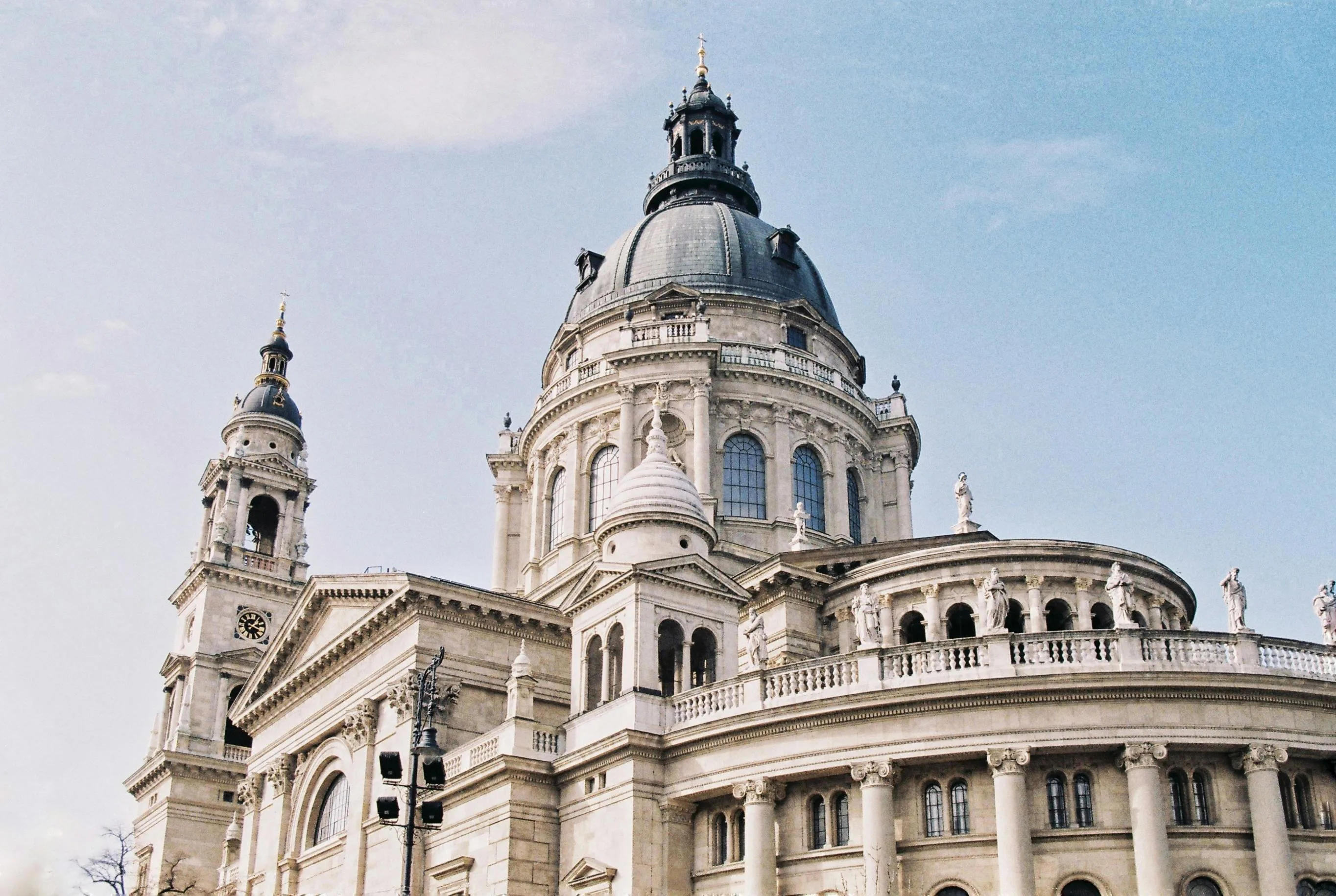
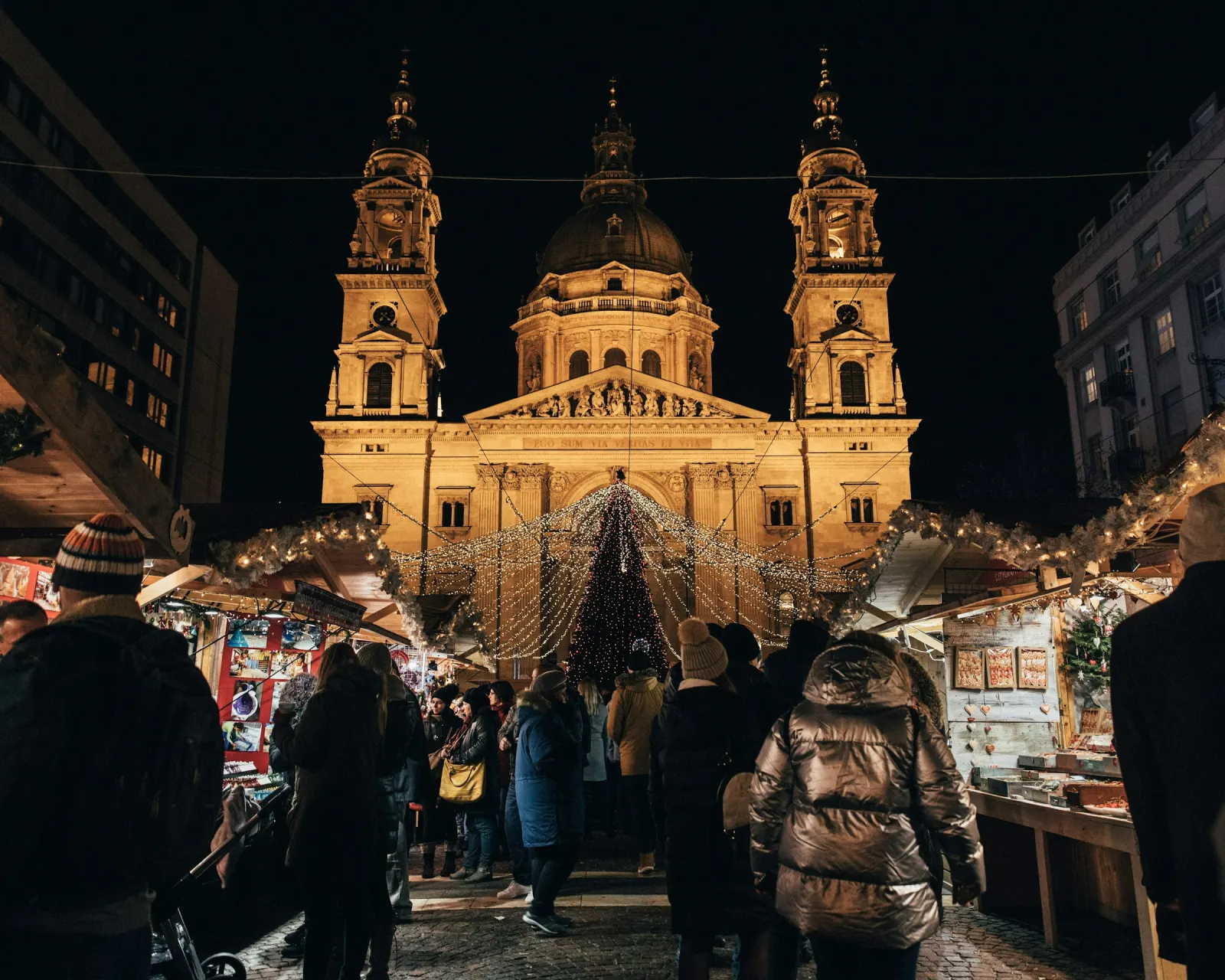
Vörösmarty tér is the traditional one, with around 100 stalls on the square in front of the Gerbeaud café, a Budapest institution since 1858. Advent Bazilika, on the square in front of St. Stephen's Basilica, is the younger, showier one. Every evening a light show is projected onto the Basilica's facade, there is a small ice rink that is free for children, and European Best Destinations readers have voted it the best Christmas market in Europe more than once.
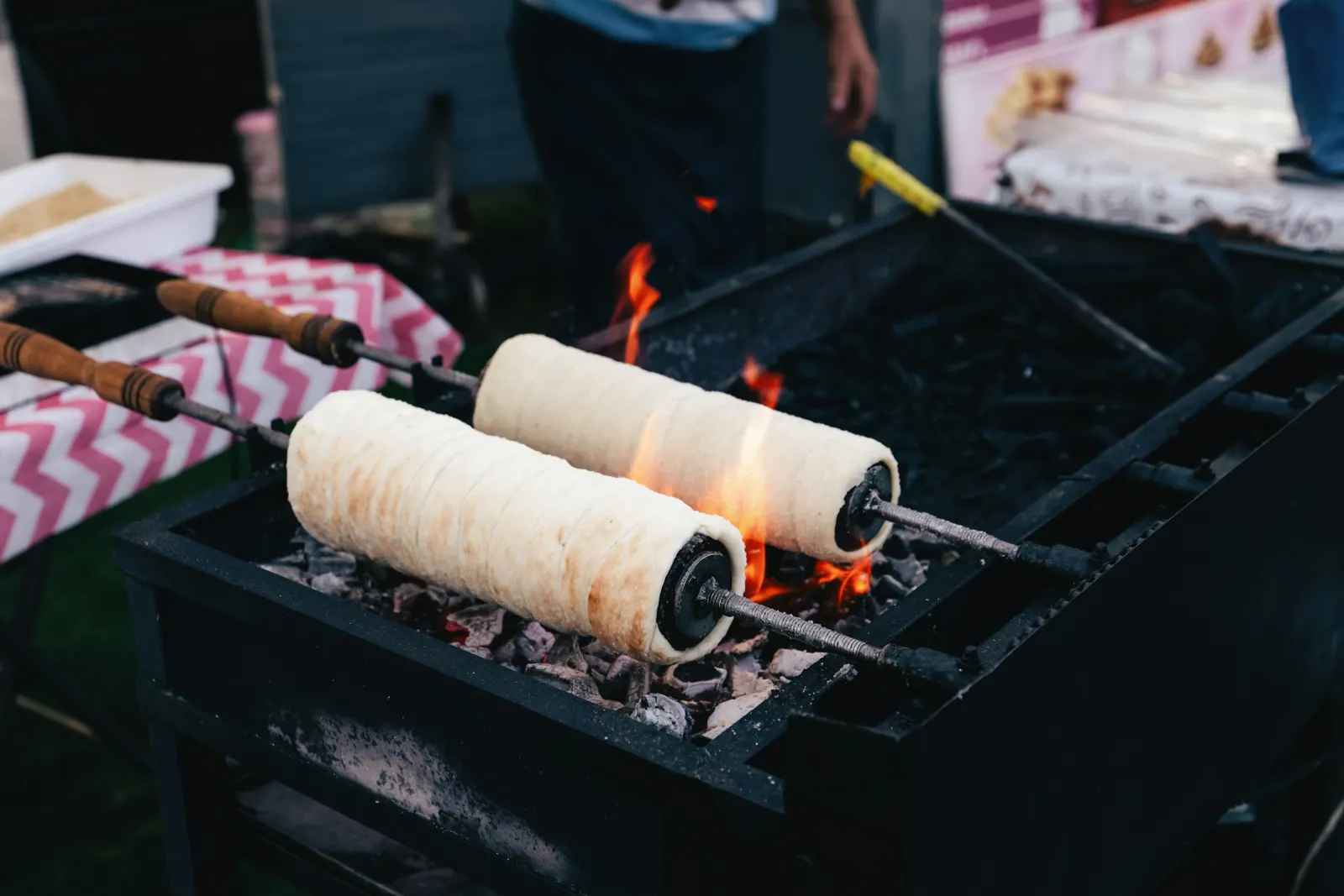
On the Plate: This is where Budapest beats the other two. Lángos with sour cream and cheese, töltött káposzta (stuffed cabbage), sausages off the grill, and kürtőskalács, the chimney cake, turned on a spit over charcoal and rolled in cinnamon sugar or walnuts. Finish with a slice of bejgli, the poppy seed or walnut roll that no Hungarian Christmas table goes without.
To drink, order forralt bor, Hungarian mulled wine, or krampampuli if you spot it on the board: a sweet, spiced spirit served hot.
Local Secret: From late November, the city transport company BKV runs its Fényvillamos, trams covered in Christmas lights from end to end. Check the schedule for the routes and catch one after dark.
Worth the Detour
One advantage of doing this trip by road: some of the best stops are between the cities.
Český Krumlov (Prague to Vienna): A UNESCO-listed town on a bend of the Vltava, with a castle above it and its own Advent market on the main square. Going this way adds about an hour and a half of driving compared to the motorway, plus however long you stay.
Bratislava (Vienna to Budapest): Slovakia's capital is about an hour from Vienna and only a small detour on the way to Budapest. The market on the Main Square is compact, good value, and known for lokše, thin potato pancakes filled with anything from goose liver to poppy seed.
Trivia: Three Cities, One Christmas
One Pastry, Three Names: The chimney cake you'll find in all three cities started out as kürtőskalács in Transylvania, where the oldest known recipe dates from 1784. In Vienna it's sold as Baumstriezel. In Prague it's trdelník, marketed as an old Bohemian treat, even though it only reached Prague's tourist streets in the 2000s, by way of Slovakia.
The Carp in the Bathtub: In the days before Christmas, tubs of live carp appear on Prague's street corners, and some Czech families still keep theirs in the bathtub until Christmas Eve. Carp is the Christmas Eve fish in Hungary too, cooked into a paprika-red fisherman's soup, and in Austria, where it's breaded and fried.
Who Brings the Presents: Not Santa. In all three countries the gifts come from the Christ Child on Christmas Eve: the Christkind in Vienna, Jézuska in Budapest, and Ježíšek in Prague. St. Nicholas comes earlier, on the night of December 5, usually with a devil in tow: the Krampus in Austria, the krampusz in Hungary, and the čert in Prague.
The Journey: Three Countries, One Car
By train, the trip is easy on paper: about four hours from Prague to Vienna and under three from Vienna to Budapest. In practice it means hauling suitcases on and off trains in peak season, plus a taxi at both ends of every leg.
Driving yourself looks simpler until you add it up. You need a separate motorway vignette for each country (Czech, Austrian, and Hungarian, plus Slovak if you stop in Bratislava). Winter tires are compulsory in Austria and the Czech Republic when the roads are wintry. Dropping a rental car in a different country often costs several hundred euros on top of the rental itself. And parking near the markets is scarce in all three cities.
With a private driver, the whole thing becomes one continuous trip. You are picked up at your hotel door, your luggage stays in the car, and you can stop for lunch in Český Krumlov or a mulled wine in Bratislava without rethinking the schedule. You reach the next hotel with time to check in, change, and be on the square when the lights come on.
All three countries are in the Schengen area, so the borders are rarely an issue. Austria has been running spot checks at its land borders for years, though, so keep your passports on you rather than packed in a suitcase.
From our drivers
We drive the whole route or any single leg of it, in either direction, with stops wherever you want them. Tell us your dates and we'll time each drive so you reach the next square before the lights come on.
Planning a trip to Hungary?
We drive these routes regularly. Message us and we'll put together a plan that fits your dates and interests.